
Akinori Ikeda Photography
Buddhist Wedding Ceremony
●A Path of Ancestral Connection and Reflection
In modern Japan, 80–90% of weddings follow Western-style traditions. Among couples who choose traditional attire, Shinto ceremonies remain far more common, while Buddhist weddings account for only about 1–2%. Yet for families with strong Buddhist roots, the ceremony continues to hold deep meaning, honoring ancestors and the spiritual bonds that connect generations.

Gallery





Description
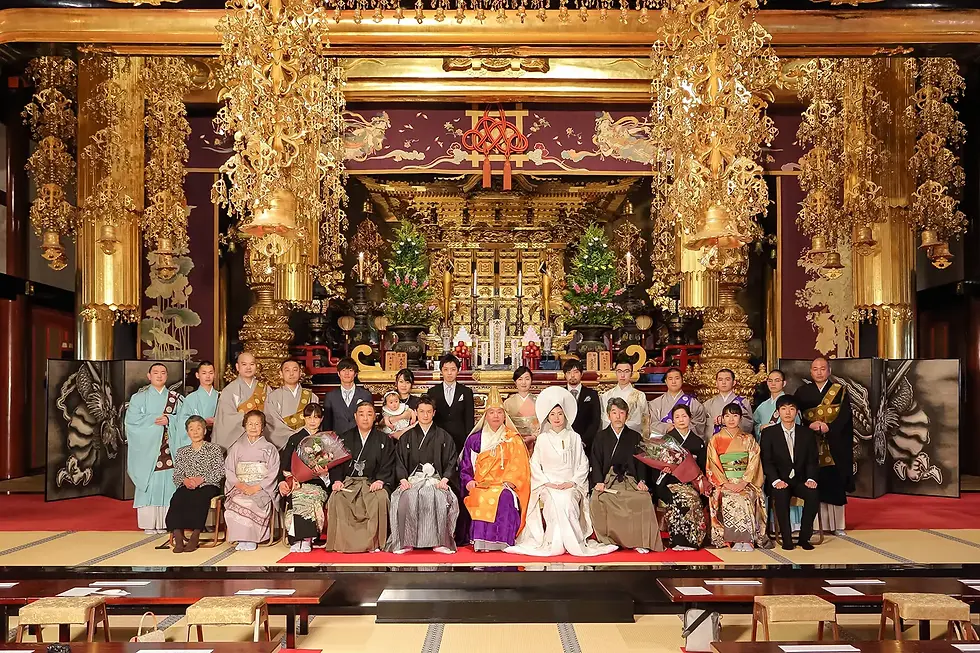
A Buddhist wedding, or Butsuzen-shiki, is a ceremony held before the Buddha and the spirits of one’s ancestors. While Western-style weddings account for nearly 80–90% of modern ceremonies in Japan, and Shinto weddings remain the most common choice among couples who wear traditional attire, the Buddhist wedding continues to be cherished by families with deep Buddhist roots. It is a quiet, spiritual celebration that emphasizes gratitude, harmony, and the karmic bond that brings two people together.
The Ceremony: Honoring the Past, Embracing the Present
The couple sits before the altar as a monk chants sutras, filling the space with a calm, resonant rhythm. This chanting symbolizes purification and guidance from generations before them. The atmosphere is serene—less focused on outward display and more on the inner sincerity of the heart. In this setting, marriage is seen not as a beginning created in the moment, but as a continuation of a connection shaped by past lives and carried into the future.
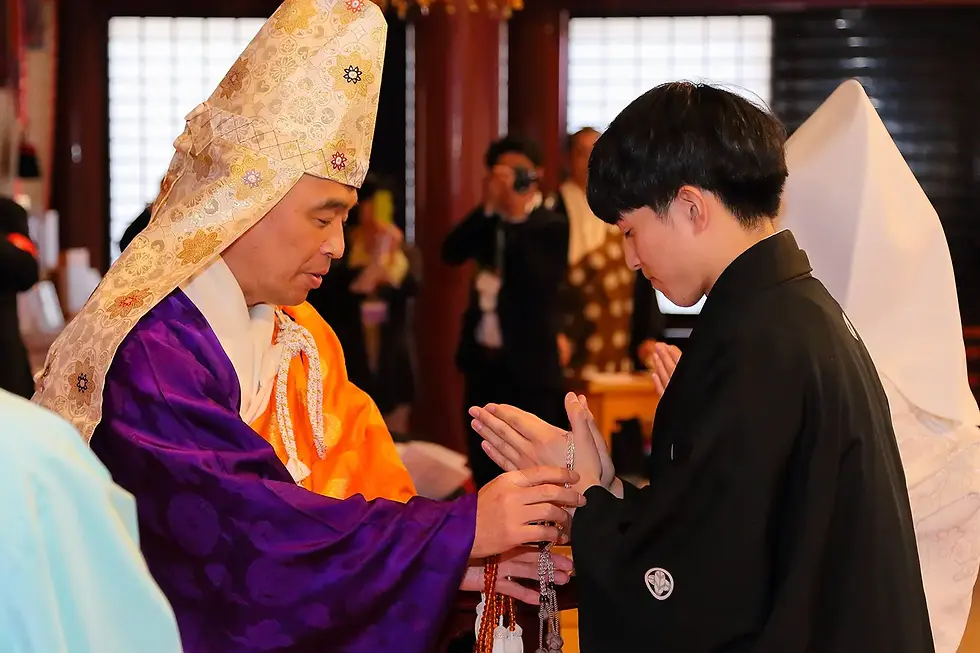
The Offering of Juzu (Prayer Beads):
Instead of exchanging rings, the bride and groom receive juzu, Buddhist prayer beads. The circular form represents the endless cycle of life, the unity of two families, and the shared path the couple will walk. Holding the beads is a reminder that their bond is supported by compassion, mindfulness, and the teachings of the Buddha.
Ancestral Presence:
A central element of the Buddhist wedding is the acknowledgment of ancestors. The couple expresses gratitude for the lives that came before them, recognizing that their union is possible because of the lineage they inherit. This sense of continuity is one of the ceremony’s most distinctive qualities.
How It Differs from Christian and Shinto Weddings
Christian weddings emphasize vows before God, focusing on love, promise, and divine blessing. Shinto weddings center on purity, nature, and the connection between families through sacred rituals.
In contrast, the Buddhist wedding highlights reflection, karma, and the quiet acceptance of life’s interconnectedness. Rather than spoken vows, the sincerity of the couple’s hearts—and their gratitude toward ancestors—forms the foundation of the ceremony.
● A Message of Timeless Continuity
Every element of the Buddhist wedding—from the chanting of sutras to the offering of prayer beads—carries a sense of calm and spiritual depth. It is a ceremony that honors the past while gently guiding the couple into their shared future. For those seeking a wedding rooted in reflection, compassion, and ancestral connection, Butsuzen-shiki offers a uniquely meaningful expression of Japanese tradition.

Ending Note
Though less familiar to many, the Buddhist wedding carries a unique depth. The sound of chanting, the soft glow of candles, and the presence of ancestors create a sense of timeless continuity. For those seeking a ceremony rooted in reflection and spiritual connection, Butsuzen-shiki offers a beautiful glimpse into the heart of Japanese tradition.